
It is no secret that among lawyers there is a significant population of “swifties”, some very influential, like Minister Zaldívar, and others not so much. In this short article we celebrate the career of Taylor Swift, who by creating for us a soundtrack contemporary for love, heartbreak and other experiences for which the millennials We could only find solace in songs from the 80s and 90s. Swift has generated one of the most profitable catalogs in the music industry, with almost 54 billion streams on Spotify and a tour that, in just 22 dates, generated 300 million dollars and is estimated to generate up to a billion dollars.
Taylor Swift cannot be separated from her big ideas and power plays; therefore, this post demands to now go into the most boring part for some – but probably the reason why some continue reading this – that is, the legal support that allows the protection of her music: copyright.
I Knew You Were Trouble: Exploitation of copyright
This is a legislation that generates, in favor of the authors and other people involved, a significant number of privileges of use and exploitation that are not always easy to understand, because on the same work we see rights that operate in parallel in favor of different people who seem to have nothing to do with the author. In this way, not only those who write the lyrics or musical notes have rights, but also, for example, those who sing or even those who record have other rights.
It is important to know that the purpose of the rights referred to is none other than to constitute an incentive that stimulates cultural development to eventually allow the free use of works by the general population and thus make possible the creation of more and more culture. In this system of incentives, the bargaining chip is precisely the exclusive right of exploitation for a certain time, known as copyright.
Thus, this variety of privileges facilitates the recognition and remuneration of the participation of different individuals in the various cultural industries, such as literature, audiovisual or music, to mention a few.
Without this text having to get too technical, based on some cases related to Taylor Swift's music we can understand some aspects of the music industry in a very specific way and, at the same time, notice the transformation of an industry by an author with sufficient influence and lyrical creativity, but also legal.
In particular, his experience gives us the opportunity to comment on issues such as the distinction between music, lyrics and performance, as well as the question of originality and the protection of ideas or concepts such as copyright.
Shake it off: Protection of originality
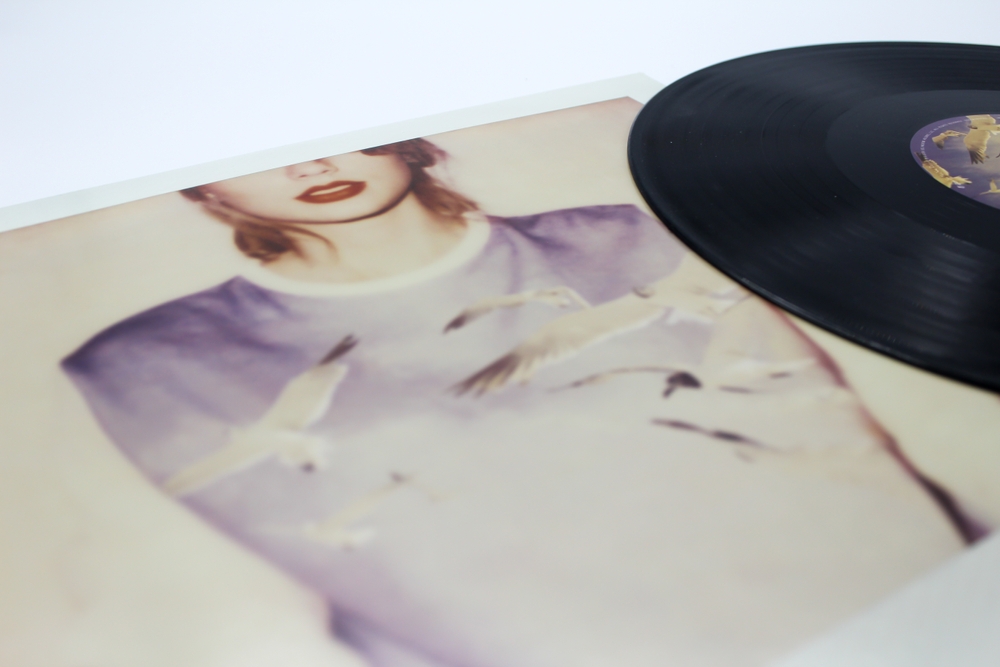
A first aspect that Taylor Swift can help us understand is the question of originality in literary creation. To do so, I suggest that you accompany this reading with the masterpiece that is “Shake It Off” from her album 1989. A song that suggests that we have as a hymn of life an attitude that allows what others do and say about us to slip past us.
And it is here that a first controversy arises that allows us to study what is original in a work and to what extent an expression can or cannot be protected. A central part of this song is the following phrase, which I ask you to read while singing:
“Players gonna play play, play, play
And the haters gonna hate, hate, hate, hate, hate
Baby, I'm just gonna shake, shake, shake, shake
I shake it off, I shake it off
Heartbreakers gonna break
Fakers gonna fake
I'm just gonna shake
“I shake it off, I shake it off”
Before we get into the study, first a little legal context. Both copyright in the United States (copyright), such as that of our country, protect the originality of a work that has been fixed in a material medium, which is not just an idea, but has come from the human being in whom it found its origin to be fixed in an object, such as paper or a word processor on a computer. The above means that copyright legislation protects the right of a person over what he or she expresses and fixes, provided that it has originated in that person and not in another.
Related articles

CFE PORTFOLIO 2026-2027: 58 PROJECTS TO STRENGTHEN THE TRA…

New tax incentive for film and audio production…
