Simple: it goes against the Constitution and the opportunities for Mexico.
Closed economy and attempts at monopolies, omen of historic defeat.
CDMX, August 23, 2021. Juan Carlos Machorro, expert partner in the firm's energy sector Santamarina + Steta, He pointed to a panorama of failures for Mexico's energy policy, which will eventually lead to resuming the path of competitiveness in a global open market. “It is clear that this government has a very different vision from the previous one on both the electricity and hydrocarbons issues. Unfortunately, today the players in the sector are more dedicated to defending their rights in court than to developing their businesses, with a spillover for Mexican companies.”, Dijo.
The specialist explained that the federal energy policy began to try to reverse the energy reform from the beginning of the regime, with administrative actions such as the cancellation of tenders, rounds and auctions. Then, a year and a half ago, it tried to issue administrative rules against market freedom, with a decree to reform the Electricity Industry Law. This began to impact the players in the sector, who presented means of defense. “Fortunately, the courts have lived up to the Constitution and have been stopping these attempts,” stressed.
Juan Carlos Machorro added that "Contrary to the President's own saying that stairs are swept from top to bottom, this time he acted in reverse, because there is a hierarchy of laws and the highest is the Constitution. Unfortunately for the current counter-reform energy policy, the new composition of Congress reduces the power of the Executive to modify it."
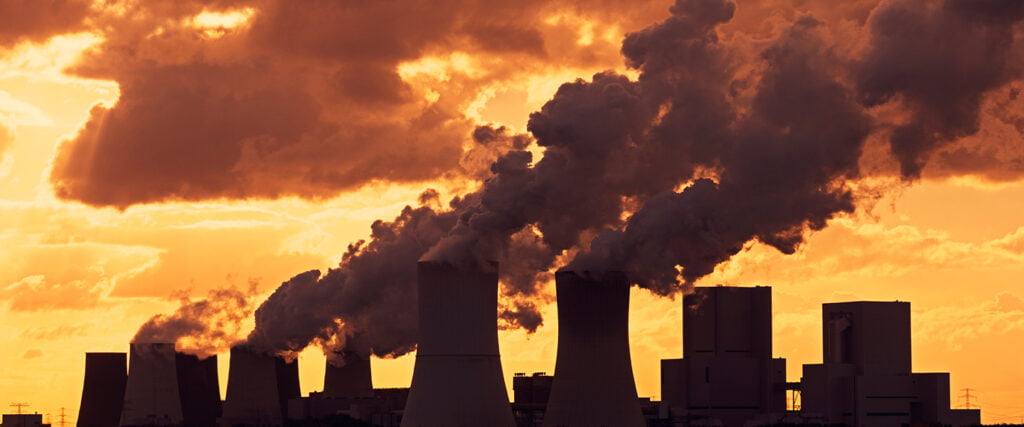
The expert clarified that, even in the remote case that the regime were to attempt a constitutional reform, managing to convince a qualified majority and local Congresses, a new controversy would arise, because it would violate two fundamental rights: the right to health and the right to a clean environment, given that the Federal Government insists on returning to a closed and polluting economy, privileging PEMEX and CFE in their old practices, instead of encouraging these companies and other agents to evolve towards clean energy, in an environment of free competition.
“Additionally, the current energy policy would be facing a next front, which is made up of all the agreements and treaties that it has with numerous countries. Particularly the T-MEC, in which Mexico is strongly committed in terms of trade, the environment and human rights. Although in the confirmation of said treaty the 4T left a clause for Mexico to reserve the right to reform its laws, the treaty is complex and has several intertwined chapters. Simply, the economy cannot be closed or an attempt against a philosophy of environmental protection and human rights that our partners and the rest of the world have already adopted,” concluded.
UN: Clear, serious steps to fight climate change. Possible actions.
Violation of even our own laws.
CDMX, September 2, 2021.Juan Carlos Aguirre, an expert environmental lawyer from the law firm Santamarina + Steta reported that the United Nations Organization (UN) launched the program United Nations Decade on Ecosystem Restorations, which “It constitutes an international effort to encourage all countries to promote policies and actions to prevent, stop and reverse the degradation of ecosystems.”
“The UN program can be used as a reference framework for the implementation of comprehensive public policies on ecosystem restoration. The efforts of the Mexican government through the implementation of the Program for the Protection and Restoration of Priority Ecosystems and Species (PROREST) by the National Commission of Protected Natural Areas (CONANP) are limited to the restoration of ecosystems in areas located within one of the decreed protected natural areas. This shows the lack of comprehensive actions on ecosystem restoration and of inter-institutional coordination in this regard,” he said.
"An example of the above is the lack of compliance with the General Law on Climate Change, since no action program has been implemented at the federal, state and municipal levels to develop restoration schemes and sustainable management of forests, jungles, wetlands and in particular mangroves and reefs, or to conceive restoration as one of the pillars of climate change adaptation measures, as provided for in said Law."He stressed.
Additionally, Juan Carlos Aguirre pointed out that Mexico has failed and will continue to fail to comply with the guidelines for ecosystem restoration, as long as it lacks a cross-cutting program that includes the federal entities and municipalities. “It is urgent to implement adaptation actions to CC, which specifically include the restoration of ecosystems,” concluded.
Despite the challenges facing the industry, growth is on the horizon.
Rejection of bankruptcy proceedings is increasing due to lack of time and specialization.
CDMX, October 5, 2021. Carlos Olvera, legal partner and expert in restructuring and bankruptcy of the law firm Santamarina + Steta, noted that courts in Mexico urgently require substantial changes to properly apply the bankruptcy law, designed to protect companies in economic crisis.The spirit of this law, as in many others around the world, is to preserve insolvent companies in order to protect investment and work, both of which are essential for economic recovery.” said.
The specialist clarified that, although there have been fewer cases of insolvency than expected in Mexico, many companies are resorting to the courts to obtain the benefits that the law grants them to restructure their businesses and stay afloat.However, support is urgently needed for the judiciary to have more specialization, either through the creation of more courts or the transformation of district courts, which are overwhelmed and require more tools, materials and techniques to face their responsibility to society." destacó.
Carlos Olvera reported that "Since the creation of the Federal Institute of Commercial Bankruptcy Specialists (Ifecom) on May 12, 2000, as an auxiliary body of the Federal Judiciary Council (CJF) with technical and operational autonomy, as of November 30, 2020 (which is the last official report available) a total of 805 commercial bankruptcies have been admitted. From June to November 2020 alone, 27 bankruptcy applications were admitted in six states of the country, but unfortunately 48 applications were rejected in 13 federal entities..
"We are very far from effective judicial delivery in matters of bankruptcy, considering essentially the global and national economic crisis," concluded.
Venture capital investments have increased by nearly 180% since the beginning of the year.
Eyes on companies that respect ecology, society, sustainability and that are transparent.
Monterrey, NL, October 29, 2021. Carlos Argüelles, expert legal partner in mergers and acquisitions for venture capital investments at the law firm Santamarina + Steta, pointed out that there are numerous Mexican companies that are seeking financing and that investments in Mexico have grown steadily, but under new rules that are already in force in the world.The money is there, but the homework needs to be done.” said.
The specialist reported that, according to information published by the platform of Transactional Track Report, venture capital in Mexico has grown by nearly 180% since the beginning of the year and, according to data from the Mexican Private Equity Association (AMEXCAP), at the end of June 2021, at least $3,500 billion was invested in 153 transactions.The important thing is that Mexican entrepreneurs and companies seeking financing are prepared for the new rules of the global market, which require them to have an environmental, social and corporate governance approach. No one is going to invest in businesses that are not working at least on sustainability programs," destacó.
Carlos Argüelles stressed that post-COVID capital is only looking at companies that produce goods and services with minimal or no impact on the environment, the social communities that surround them and that have boards of directors with transparency policies in their public information and codes of conduct. “There are already several Mexican corporations that comply with the precepts of sustainability, but SMEs and Start-Ups of entrepreneurs still have a long way to go when they are, precisely, the ones that need financing the most.”He said.
•Some companies with complex operations are unable to comply with the law and are under threat of tax and criminal prosecution.
CDMX, July 14, 2021. Karina Robledo, Tax expert of the firm Santamarina + Steta He noted that the deadlines of the anti-outsourcing law will end up constituting a blow to trade relations.Large companies, which had outsourced staff and hired suppliers to complement their activities, will simply not have time to resolve all the negotiations, registrations and even conflicts of inequity that will arise between the same consortia due to the complexity of their operations. For this reason, they will end some commercial relationships that are similar to their corporate purpose and that will be considered prohibited in August.” said.
The specialist explained that the deadline of August 1 is approaching, after which payments for the hiring of non-specialized services will not have fiscal effects, but for labor issues, the deadlines are even shorter and more complex. “Many companies are trying to figure out how to comply. For example, if a company is dedicated to the marketing of household appliances and offers guarantees and maintenance services to its customers, which were previously provided by a supplier, now it only has three alternatives: terminate the contractual relationship with that supplier, carry out said activities directly or eliminate said activity from its corporate purpose. All of these cases are now unanswered questions in the new rules of the game,” He explained.
Karina Robledo added that uncertainty prevails among various industrial and service sectors because the new law forces them to increase their workloads, under a policy of shock with penal consequences and not of joint work to achieve their good intentions. “I hope that better legislative techniques are applied to stimulate the industry, eliminate defects and boost the competitiveness and employment of companies in Mexico,” concluded.
Despite the challenges facing the industry, growth is expected.
The key: export of auto parts and finished products to the US.
Querétaro, September 10, 2021. Jose Ramon Ayala, Director of the firm's offices Santamarina + Steta In Querétaro and the Bajío region, the country anticipated recovery and growth of the automotive sector in Mexico for the second half of this year, “Despite the great challenges that the sector has faced and continues to face today, having already been one of the sectors hardest hit by the pandemic”.
The specialist reported that some segments of the industry began to have problems a few years ago due to factors such as the growth of private driver platforms, which was accentuated by the pandemic and factors linked to it, such as staying at home and remote work: “The new generations think more about owning a vehicle to have it parked, which generates additional costs such as insurance, permits, ownership, etc.”, said.
José Ramón Ayala added that the sector's difficult position was also aggravated by the impact that the pandemic has had on consumers' pockets, as well as by the shortage of automotive chips, which has led to delays in deliveries and even cancellations of orders.
However, the specialist explained that the recovery of the automotive sector will be due to the clear recovery of the United States economy, which requires supplies of auto parts from Mexico. “It is clear that the growth of the US industry will continue in the coming months, which is opening the opportunity for the national auto parts sector to be the leader of the recovery, sending 87 to 90% of its manufacturing there,” concluded.
Santamarina + Steta challenged the Mexican Official Standard NOM-051 through two different amparos. The first regarding the constitutionality of the Standard in general and the second exclusively regarding article 4.1.5. of the NOM, which establishes the prohibition of the use of characters, images of celebrities, among others, in prepackaged products and non-alcoholic beverages.
The arguments put forward by the Santamarina + Steta Intellectual Property litigation team, headed by José Pablo Pérez Zea, Efraín Olmedo, Ivanna Craviotto and Juan Pablo Bueno, showed that our client's intellectual property rights and commercial discourse were violated, as well as the lack of reasonableness between the prohibition established by the NOM and the problem that is sought to be resolved.
On October 29, 2021, a Federal Administrative Court decided to grant our client protection to remove Article 4.1.5 from its legal sphere. Thus, the food products marketed by the company may include children's characters, animations, celebrities, athletes, mascots, interactive elements or visual games on their labels, whether they are its own or licensed.
The Rural Development and Conservation, Agriculture and Food Self-Sufficiency Commission approved the modification to the Sustainable Rural Development Law (LDRS) to integrate the nopal as part of the list of strategic crops in Mexico.
Basic and strategic products are those foods that are part of the diet of the majority of the population in general or differentiated by region, and agricultural products whose production process is related to significant segments of the rural population or national strategic objectives.
The LDRS establishes that the State must take measures to ensure the supply of food and basic and strategic products to the population, promoting access to them by the least favored social groups and giving priority to national production.
Currently, the list consists of 12 products: corn, sugar cane, beans, wheat, rice, sorghum, coffee, eggs, milk, beef, pork, poultry, fish and, now, cactus.
The nopal is one of the most important crops in Mexico as a food, due to its ecological functions and medicinal and industrial applications and, of course, from a cultural and historical point of view.
More than 100 species of have been reported in Mexico. Opuntia (cultivated and wild), genus to which this crop belongs (nopalitos, tuna, xoconostles), most of them endemic and with a wide distribution, found from sea level to 2700 meters above sea level.
In 2020, more than 860 thousand tons of nopalitos were produced, mainly in Morelos and Mexico City (Milpa Alta). 55 thousand tons are exported, mainly to the USA.
In the case of tuna and xoconostle, more than 470 thousand tons are produced, mainly in the State of Mexico, Puebla and Zacatecas, and 17 thousand tons are exported.
In order to obtain new plant varieties, some Mexican institutions have made efforts to take advantage of the diversity of this crop and the advances in the knowledge of its genetics, such as the Autonomous University of Chapingo and the National Institute of Forestry, Agricultural and Livestock Research (INIFAP).
In 2006, the Guidelines for the examination of the distinctiveness, uniformity and stability of varieties of nopal, tuna and xoconostles were adopted at the international level by the International Union for the Protection of New Varieties of Plants (UPOV), a protocol led by Mexico, which recognizes 10 shades of fruit colors, among other characteristics, for the identification of varieties, and which constitutes the basis for the registration of varieties in the world, as is the case in Israel (6) and the USA (4).
In the case of Mexico, there are only two protected varieties, called “Mango” and “Venustiana”, whose breeder is the Autonomous University of Chapingo.
However, traditional varieties selected by the producers themselves have been described and registered in the National Catalogue of Plant Varieties. There are 61 varieties of nopal-tuna and 30 of xoconostle registered, which allows us to provide certainty to avoid their illegitimate appropriation.
The Sustainable Rural Development Law establishes priority actions to promote production for those crops that are considered basic for food or for their relevance to the rural population.
The approval by the Rural Development and Conservation, Agriculture and Food Self-Sufficiency Commission of the Chamber of Deputies to reform Article 179 of the Sustainable Rural Development Law in order to incorporate the nopal within the list of basic and strategic foods, implies the obligation of the State to promote its production and access, which can provide special support that promotes its conservation and evolution.
Mexico continues to face unprecedented times and historic challenges since the new administration took office in December 2018. While a fairly modest recovery appears to have begun, the outlook remains challenging for businesses coexisting with government policies that have done little to support businesses. Rather, several sectors in which private investors play a significant role appear to be under permanent scrutiny and examination. While the contest remains useful in overcoming difficult financial conditions, it has not been used as frequently as one might expect.
Brief analysis of recent energy policies implemented by the Government of Mexico in relation to national and international legal commitments on emissions reduction as part of climate change mitigation actions
Background
Mexico signed the United Nations Framework Convention on Climate Change (UNFCCC) in 1992, being approved in that same year by the Senate of the Republic and ratified before the United Nations Organization (“UN”) in 1993. Its promulgation Decree was published in the Official Gazette of the Federation (“DOF”) on June 7, 1993 and entered into force on March 21, 1994. Its objective was set out in Article 2, in order to “Achieve stabilization of greenhouse gas concentrations in the atmosphere at a level that would prevent dangerous anthropogenic interference with the climate system. This level should be achieved within a timeframe sufficient to allow ecosystems to adapt naturally to climate change, ensure that food production is not threatened, and allow economic development to proceed in a sustainable manner.”
Legal framework
Following the commitments to implement actions to mitigate the harmful effects of climate change, on June 6, 2012, the General Law on Climate Change (“LGCC”) was published in the DOF, which establishes the “provisions to address the adverse effects of climate change"and regulates the issues established in the Political Constitution of the United Mexican States ("CPEUM") related to environmental protection, sustainable development, as well as the preservation and restoration of ecological balance.
As part of the commitments assumed by Mexico at the Conference of the Parties, COP 21 of the UNFCCC (analyzed below), various provisions of said Law were reformed in 2018, incorporating the concept of Nationally Determined Contributions (“NDCs”), as transcribed below:
“Article 3. For the purposes of this Law, the following definitions apply:
[...]
X. Nationally determined contributions: set of objectives and goals, assumed by Mexico, within the framework of the Paris Agreement, on mitigation and adaptation to climate change to meet the long-term objectives of the United Nations Framework Convention on Climate Change.
XI. […]"
For its part, Article 31 of the LGCC provides that the national climate change mitigation policy includes “plans, programs, actions, economic, policy and regulatory instruments” for the gradual reduction of specific emissions, in accordance with the CDNN, in order to comply with the “objectives of the Paris Agreement and any other international treaty signed by Mexico on climate change.
In this regard, it is important to highlight that Article 33 of said Law, in its sections I and III, establishes that the objectives of public policies for the mitigation of climate change must be aimed at protecting the environment and guaranteeing the right to a healthy environment and sustainable development through the mitigation of emissions, as well as implementing the substitution of the use and consumption of fossil fuels and the generation of electrical energy through renewable energy sources.
Finally, in its Second Transitory Article it was established, on the one hand, “indicative objectives or aspirational goal ( "Conditional Goal”) a 2020% reduction in emissions by 30 compared to the baseline and a 50% reduction by 2050 compared to emissions in 2000, and an Unconditional Target of 22% of greenhouse gas (“GHG”) emissions and 50% of black carbon emissions by 2030 compared to the baseline. This last objective constitutes the NDC, which would imply reaching the maximum peak of national emissions in 2026.
In the case of the Energy Sector, the Third Transitory Provision established that the Ministry of Energy (“SENER”), in coordination with the Federal Electricity Commission (“CFE”) and the Energy Regulatory Commission (“CRE”), should promote compliance with the Conditional Goal to generate electric energy through the use of clean energy sources and reach at least 35% by 2024.
Energy Transition Law
The Energy Transition Law (“LTE”), published in the DOF on December 24, 2015, aims to “regulate the sustainable use of energy as well as obligations regarding Clean Energy and the reduction of polluting emissions from the Electricity Industry, maintaining the competitiveness of the productive sectors.”
Articles 4 and 6 establish the obligations of members of the Electric Industry (“IE”) and participants in the Wholesale Electricity Market, both public and private, to comply with the Clean Energy Goals, and the obligation of SENER to promote the generation of electric energy from clean energy sources, in order to achieve the goals established in the LGCC in relation to the IE.
Finally, its Third Transitory Article establishes that SENER must set a minimum participation goal of clean energy in the generation of electric energy of 25% for 2018, 30% for 2021 and 35% for 2024.
National Climate Change Strategy
Published in the DOF on June 3, 2013, it establishes the following main milestones in terms of emissions reduction and generation of electric energy from clean sources in periods of 10, 20 and 40 years:
10 Years:
Emissions: 30% reduction in emissions compared to baseline.
20 years:
At least 40% of electricity generation comes from clean sources.
40 years:
At least 50% of electricity generation comes from clean sources and a 50% reduction in emissions compared to emissions in 2000.
Paris Agreement
The Mexican State agreed to comply with the so-called "Paris Agreement", signed between the contracting countries at COP 21 held in Paris, France, on December 12, 2015, signing ad referendum on April 12, 2016. Its instrument of ratification was deposited with the UN on September 21, 2016, and its promulgation decree was published in the DOF on November 4, 2016, entering into force on that same date.
Its purpose is “Strengthen the global response to the threat of climate change, in the context of sustainable development and efforts to eradicate poverty”, in order to “keep the increase in global average temperature well below 2°C above pre-industrial levels, and pursue efforts to limit the increase in global average temperature to 1,5°C above pre-industrial levels”, and thus significantly reduce the risks and effects of climate change.
For its part, Article 6, point 8 of said Agreement establishes the following:
“1. […]
8. The Parties recognize the importance of have integrated, holistic and balanced non-market approaches that help them implement their nationally determined contributions, in the context of sustainable development and poverty eradication in a coordinated and effective manner, including through mitigation, adaptation, financing, technology transfer and capacity-building, as appropriate. These approaches will aim to:
a) Promoting mitigation ambition and adaptation;
b) Increase public and private sector participation in the implementation of nationally determined contributions, and
c) Provide opportunities for coordination of relevant instruments and institutional arrangements.
9. […]”.
(Emphasis added)
This implies the obligation assumed by the Parties to the Paris Agreement to implement integrated, holistic and balanced strategies to comply with the NDCs, regardless of the achievement of purely economic ends. This is in keeping with the fact that these objectives are closely linked to sustainable development and compliance with climate change mitigation policies.
Analysis of recent policies issued by SENER
On April 29, 2020, the National Energy Control Center (“CENACE”) published in its Market Information System, the “Agreement to guarantee the efficiency, quality, reliability, continuity and security of the National Electric System, due to the recognition of the SARS-CoV2 (COVID-19) virus disease epidemic” (“CENACE Agreement”). In its Sole Technical Annex, it was indicated that due to various issues of low energy demand due to the aforementioned health contingency, failures in transitory lines of various stations and electrical substations, electromechanical oscillations were generated that could have negative effects.in the reliability and integrity of the National Interconnected System”, claiming that they were generated during the testing period prior to the commercial operation of photovoltaic power plants located in the Northeast of Mexico (indicating the date of April 15, 2020).
Therefore, CENACE considered that the intermittent generation of wind and photovoltaic power plants affects the Reliability of the National Electric System in its sufficiency, quality and reliability for the Electric Supply and that they do not contribute to the "primary regulation of frequency quality control”, nor to “Physical inertia for SEN stability”. For this reason, CENACE determined that, as of May 3, 2020, pre-operational testing of wind and photovoltaic power plants that were in the process of starting operations, as well as those that had previously started commercial operations, would be suspended, arguing that there has been a considerable reduction in the consumption of electrical energy by end users due to the health contingency that the country is going through.
In addition to the above, CENACE determined that the operating limits of the electric transmission corridors will be subject to the availability of resources for generating electric energy, in order to avoid the implementation of the so-called "Remedial Action Schemes" ("EAR"), which imply the disbursement of additional economic expenses and the responsibility of the Mexican State. The above is clearly contrary to point 8 of Article 6 of the Paris Agreement transcribed above, since said SENER department prioritizes economic and market issues over real actions to mitigate climate change, such as the generation of electric energy from clean energy sources, such as wind and photovoltaic.
By giving preference to the dispatch of energy generated by conventional sources, that is, through the use of fossil fuels, compliance with the commitments assumed by Mexico regarding the reduction of emissions is prevented and, ultimately, to the detriment of the right to a healthy environment provided for in Article 4 of the CPEUM.
For information purposes, it is important to note that the legal entities called Desarrollos Eólicos Mexicanos de Oaxaca 1, SAPI de CV, and Desarrollos Eólicos Mexicanos de Oaxaca 2, SAPI de CV, filed separate indirect amparo lawsuits against the CENACE Agreement, filing them with the Second District Court for Administrative Matters, Specialized in Economic Competition; Broadcasting and Telecommunications, with residence in Mexico City and jurisdiction throughout the Republic under number 128/2020, being resolved by means of the issuance of a final judgment on October 23, 2020, published on the 26th of the same month and year, in which protection was granted to the aforementioned complainants, without the summary published by said Court on the electronic portal of the Federal Judiciary Council reflecting the analysis of the concepts of violation or the substantive meaning of said judgment. However, it should be noted that the effects of the same were granted with general character, in order not to grant them “a competitive advantage over other participants in the wholesale electricity market, but could also cause distortions in said market, affecting competition and the development of the sector, in violation of the provisions of Article 28 of the Constitution.” The core of the judgment is transcribed below for practical purposes:
"(...)
In this regard, it should be noted that the rights to free competition recognized by Article 28 of the General Constitution must not only be analyzed from the perspective of the legal interest of the participants in the electricity market who come to request constitutional protection, but from a collective dimension, in this case, of all the participants in said market and the end users who will be affected by the measures implemented in the challenged Agreement, since by limiting the participation of new companies in the wholesale electricity market and the operation of existing wind and photovoltaic plants, the necessary conditions are prevented to improve the quality of the basic supply service and reduce the rates that must be paid for said service. For this reason, it is considered that this amparo ruling must have general effects, in order to avoid an adverse effect not only for the complainants, but also for other participants in the wholesale electricity market, avoiding distortions in said market, affecting competition and the development of the sector and, mainly, end users and the population in general; without this necessarily contravening the principle of relativity of rulings established in article 107, section II, of the General Constitution, since, as the Supreme Court of Justice of the Nation itself has recognized, it admits certain modulations. In this case, if it is considered that both the rights to free competition, in their individual and collective dimension, as well as the principle of relativity of sentences, are expressly recognized in the Political Constitution of the United Mexican States, their interaction must be harmonious, so the relativity of the sentences cannot constitute an obstacle to the effective safeguarding of those rights. Hence, in the event that the challenged Agreement ceases to apply solely to the complainants, it is considered that the principle of relativity of the judgments must be modulated in the specific case, so that all market participants can benefit from the non-existence of said Agreement and comply with the ultimate objective of the Constitution, that is, to allow greater participation of economic agents in order to achieve the efficient and competitive development of the markets, for the benefit of end users and the population in general. Especially since, in the opinion of this judge, the principle of relativity of sentences could in no way justify that the acts challenged, for that reason alone, escape an analysis of constitutional regularity, since this would contravene the right of access to jurisdiction recognized by article 17 of the Constitution and 25 of the American Convention on Human Rights. In this regard, in order to preserve these principles, it is emphasized that the effects of this judgment include not only the complainants, but also all participants in the wholesale electricity market to whom the provisions contained in the challenged Agreement apply. In these terms, the constitutional protection granted is to render the Agreement to guarantee the efficiency, quality, reliability, continuity and security of the National Electric System, due to the recognition of the SARS-CoV2 (Covid-19) virus disease epidemic, dated April XNUMX, XNUMX, as well as its sole Annex, void.
(…) ”
Likewise, SENER published in the DOF, on May 15, 2020, the “Agreement issuing the Policy of Reliability, Security, Continuity and Quality in the National Electric System” (“SENER Agreement”), which violates economic competition in the sector with discriminatory treatment between participants in the Wholesale Electricity Market, favoring and strengthening CFE to continue generating electricity from polluting energy sources, while preventing compliance with the LGCC, LTE and the Paris Agreement, with respect to the objectives of the CDNN and ultimately affects the right of Mexicans to a healthy environment, in addition to the affectation of free competition rights provided for in the same way in laws and international treaties of which Mexico is a party.
The specific sections on environmental matters of said Agreement are transcribed and analyzed below:
Section 10. “Incorporation of Intermittent Clean Energy.”
10.1 The integration of installed capacity of Power Plants with Intermittent Clean Energy in the SEN will be maintained for all Power Plants that have reached the Interconnection Contract one day before the publication of this Policy in the DOF. If for any Power Plant with Intermittent Clean Energy, wind or photovoltaic, its Interconnection Contract or Generation Permit is cancelled, CENACE will evaluate the applications so that, based on the entry and progress position on its platform called "SIASIC", the Interconnection point of the Application and the regional hosting capacity of Intermittent Clean Generation Considering the Reliability of the System, the feasibility of accepting the Study request and continuing the process will be determined.
(Emphasis added)
The above shows the intention on the part of SENER to, under a distorted concept of Reliability[1], granting priority for the supply of electrical energy through conventional sources, repeatedly preventing the national and international commitments made for a sustainable energy transition and through the generation of electricity from clean sources. The above considering that the new wind and photovoltaic power plants will not have the opportunity to enter the system until there is capacity in the system and SENER will determine the feasibility of accepting the study request, it is insisted, applying a distorted interpretation of the Reliability figure by preventing the sustainable and efficient development of the energy sector, favoring CFE to the detriment of the incursion of clean energy sources, disregarding that these operate by definition in a more efficient and environmentally friendly way.
10.2 If any Power Plant with Intermittent Clean Energy, wind or photovoltaic, requests a Study at an Interconnection point, zone, region or System in which there are already congested transmission and transformation elements, due to a lack of generation resources to compensate for the intermittency and to maintain control of the frequency, voltage and reliability and selectivity of the protection schemes. CENACE, based on criteria of sufficiency, Dispatch Security and economic efficiency, may reject said requests. In due time, SENER will determine the date of reopening of the reception of Requests and the follow-up to the Requests in process.
The above section once again prioritizes avoiding the expenditure of generation resources due to the intermittency of clean energy sources, contravening the aforementioned environmental commitments to mitigate climate change, to the detriment of access to a healthy environment by the population of Mexico, avoiding the implementation of comprehensive, holistic and balanced strategies, as stipulated in the aforementioned Paris Agreement. Likewise, SENER does not have the power to determine the reopening of the reception of applications, neither to receive them initially nor to reject them. Applications for the operation of Power Plants with Clean Energy are submitted through individuals interested in obtaining a permit to generate from clean energy, so said authority is awarded regulatory powers that do not fall within its jurisdiction.
Similar to the case of the challenge to the CENACE Agreement, for information purposes it is noted that the organization called Defensa Colectiva, AC filed an indirect amparo claim against the SENER Agreement, which was filed with the First District Court for Administrative Matters, Specialized in Economic Competition, Broadcasting and Telecommunications, with residence in Mexico City and jurisdiction throughout the Republic under number 115/2020. In its claim, said complainant requests the suspension of the SENER Agreement in order that wind and photovoltaic plants are not generally considered to be unreliable and, by agreement of June 4, 2020, said judicial authority granted the provisional suspension of the act claimed in favor of the complainant.
Aspects of economic competition
In May 2021, the Federal Economic Competition Commission (“COFECE”) published the economic study entitled “Transition towards competitive energy markets: Clean Energy Certificates in the Mexican electricity industry”[2], in which, among others, he expressed his concern about Mexico's potential failure to meet the goal committed to in terms of the Paris Agreements for the generation of at least 35% clean energy by 2024.
Clean Energy Certificates (“CEL”) are one of the mechanisms used by the Mexican Government to promote the installation of generation projects based on clean sources that are lacking to achieve the goals committed by Mexico in international agreements and in national legislation, so the effectiveness of said mechanism and its application, as well as the regulations that surround them, can be evaluated in light of the fulfillment of said goals.
COFECE used a model based on statistical data on clean energy generation projects and their effective dates to analyze the effectiveness of the CEL mechanism in meeting the minimum goals for clean energy participation in the generation of electric energy committed by the country through the Paris Agreement in two scenarios: (i) an “expected” one in which all the projects scheduled in the planning instruments of the electric energy generation sector come into operation as specified; and (ii) a “realistic” one in which delays and cancellations of projects are estimated as a result of the policies and regulations recently implemented by SENER that have generated uncertainty and hindered competition in the electric industry. Through this model it is possible to conclude that:
In the “realistic” scenario, in 2022 and 2023 there would barely be enough CELs to cover the requirements, however, in 2024 there would be a shortage of 12 million CELs;
The Federal Electricity Commission, Basic Services Supplier (“CFE SSB”) would be short 10 million CELs in 2022 to meet its obligations in the “expected” scenario and 11 million in the “realistic” one; by 2024 it would be short 16 million in the first scenario and 20 million in the second; and
In 2022, Mexico would meet its clean energy goals in the “expected” scenario; however, in the “realistic” scenario, it would fail to meet them with a 0.8% shortfall in clean generation. In 2023, the shortfall would be 0.55% in the “expected” scenario and 2.9% in the “realistic” scenario, while in 2024 there would be a shortfall of 5.2 percentage points to reach the committed goal of 35% clean energy generation.
That is, in light of the changes implemented and projected in the regulations relating to the electricity sector and its application, COFECE concludes that Mexico will not meet the committed goal of clean generation for 2024.
It is worth highlighting that COFECE's analysis does not consider the potential impact that the entry into force of the Reform to the Electricity Industry Law ("Reform to the LIE"), published in the DOF on March 9, 2021 and which is under review by the Judiciary, would have on the industry, among others, in the gap of non-compliance with our commitments as a country in the generation of clean energy.
Mexico is home to a wide variety of gastronomy in foods, ingredients and drinks that are recognized worldwide for their flavor, prestige and quality. A clear example of the above is the Tequila considering that it is the most popular drink among Mexicans and the most recognized abroad.
El Tequila, being a product that is linked to the geographical area from which it originates, Jalisco, Mexico, it is considered a designation of origin. In accordance with Article 264 of the Federal Law for the Protection of Industrial Property (“LFPPI”), for a product to be considered a designation of origin, its quality, characteristics or reputation must be attributed exclusively or essentially to the geographical origin of the raw materials, the production processes, as well as the natural and cultural factors that affect it.
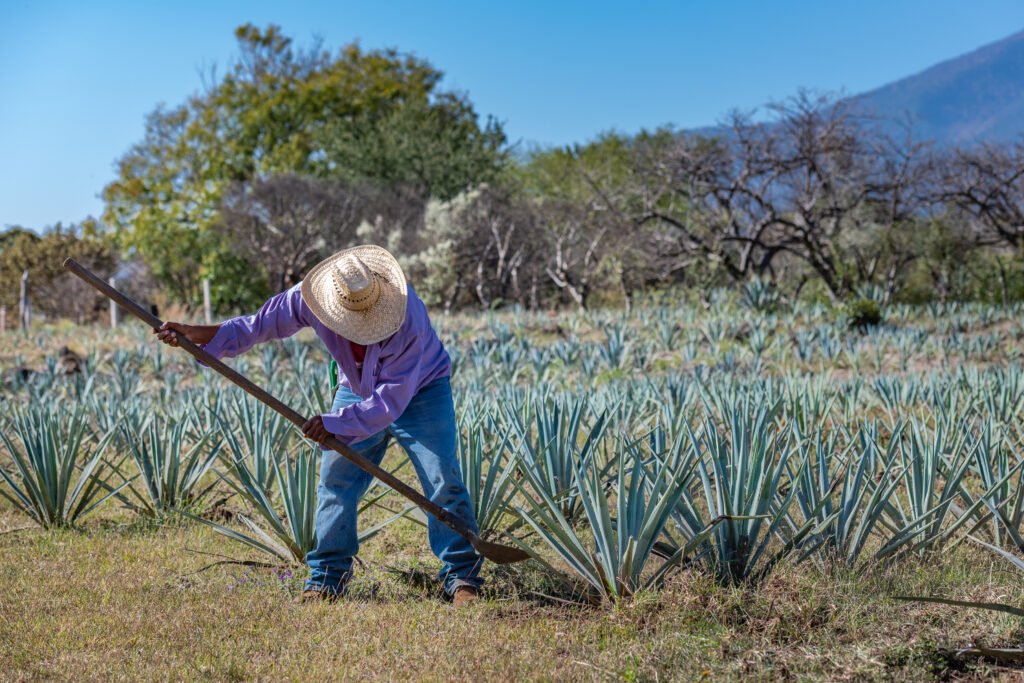
According to the Tequila Regulatory Council (CRT), the main characteristics and materials in the production of Tequila are: the climate, the soil, the soil chemistry, the plant species (agave tequilana Weber blue variety) and the human activity in relation to the cultivation and harvesting of the agave, which may include cultural techniques, production, among others.
In this regard, and considering the importance of designations of origin, a trademark that includes any designation of origin within its name, including Tequila, cannot be registered as a trademark. However, the above does not limit the use of the designation of origin within the label for marketing in Mexico or abroad.
In order for this to be carried out, it is necessary to carry out the certification process for the brands and authorization of use of the designation of origin, according to the following cases:
PRODUCERS:
Authorized producers only need to present a simple copy of the trademark registration title to the Tequila Regulatory Council (CRT).
NON-PRODUCER BRAND OWNERS:
In the case of trademark holders who are not authorized producers, it is necessary to carry out procedures before the Mexican Institute of Industrial Property (IMPI) and the Tequila Regulatory Council (CRT).
First, a Joint Responsibility Agreement must be signed between the producer and the trademark owner and registered with the IMPI. This Agreement will allow obtaining authorization to use the word Tequila and its registration can be carried out by either party.
Once authorization is obtained, it is necessary to submit to the CRT: i) a simple copy of the trademark registration title, ii) the original of the Co-responsibility Agreement, iii) a simple copy of the authorization of the agreement issued by the IMPI, iv) a set of labels or a label project, and v) the request for the provision of services and obligations of the client.
It is important to carry out the corresponding registrations mentioned above, since otherwise, the CRT will not allow the distribution and/or commercialization of the product. Likewise, it is essential to carry out the corresponding procedure before the IMPI, since unauthorized use may constitute an administrative infraction, including the use of terms that create confusion in the consumer about the origin or quality of the products protected by the trademark, such as “gender”, “type”, “manner”, “imitation”, “produced in”, “manufactured in” or other similar terms. (Article 386 LFPPI)
These administrative violations may lead to fines of approximately $22,405,000.00 pesos, as well as temporary or permanent closure.
In addition to the above, it is considered a crime to falsify a trademark by using designations of origin for commercial speculation purposes to produce, store, transport, distribute or sell products of national origin that do not have the corresponding certification in terms of the applicable Mexican Official Standard, with the purpose of obtaining an economic benefit for oneself or for a third party. (Article 402 LFPPI)
This crime can be punished with three to ten years in prison and fines of between $180,000.00 and $44,810,000.00 pesos approximately.
Latin Lawyer Regulators is a guide that provides overviews of the main regulators in Latin America. Each profile provides key data about the regulator and how it operates, helping you stay informed about the regulatory framework in which companies operate and thus minimize risks.