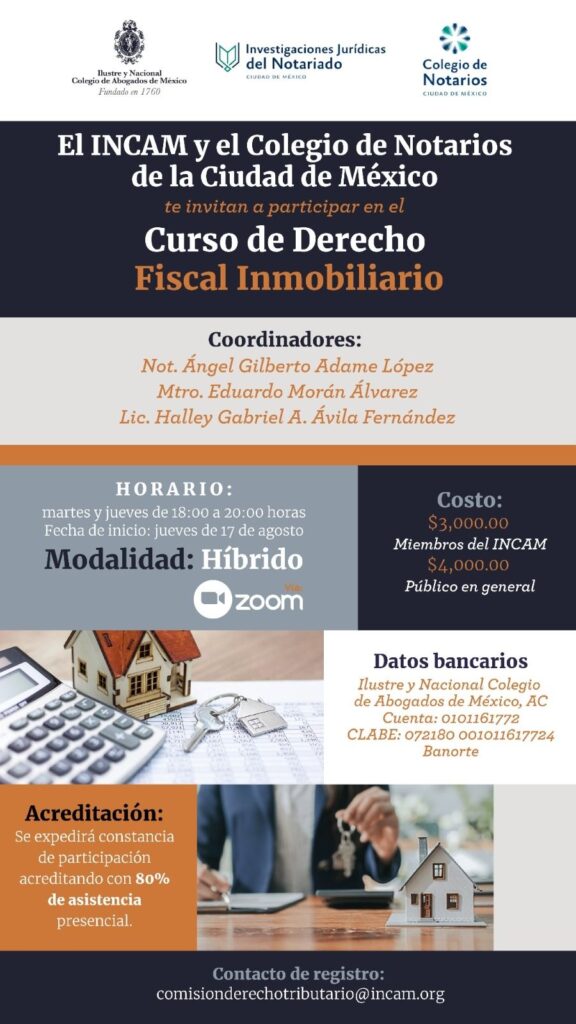
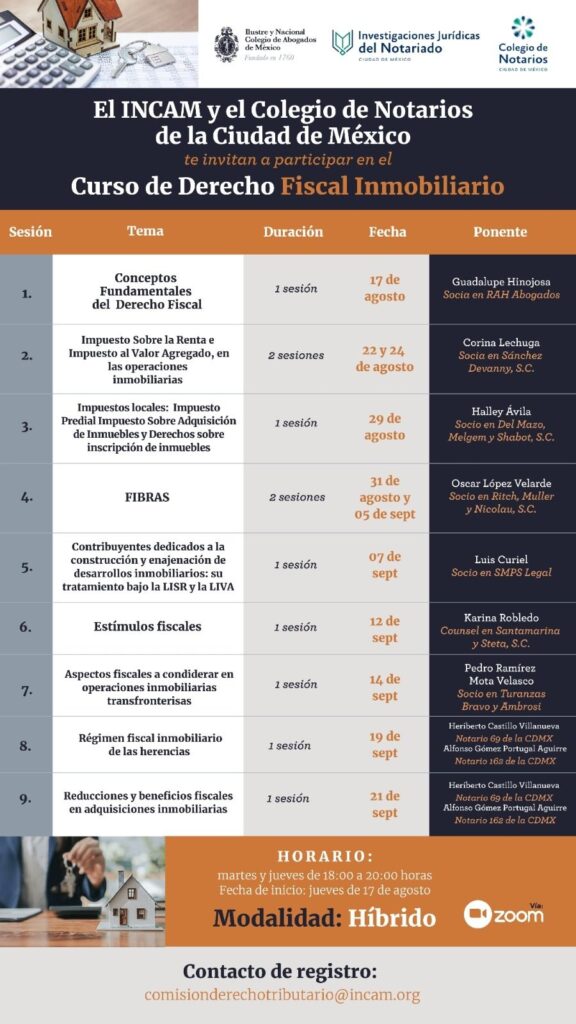
Our counsel Karina Robledo participates as a speaker at the conference “Fiscal Incentives“, a session that will take place on September 12.
If you are interested in taking part in this course, write to commissionderechotributario@incam.org for more information about the registration process.
Investors are charting the industry's course toward a more sustainable path, aligning their values with the environmental, social and corporate governance standards that the global economy demands.
The future is written with three letters: ESG (Environmental, Social and Governance).
The COVID-19 pandemic marked a turning point in history, bringing environmental, social and corporate governance issues to the forefront of attention, promising a more sustainable direction for the operations of any company that calls itself responsible.
In fact, it is the shareholders themselves who are setting the tone in the various economic sectors, because although there is no legal regulation or official guidelines that force companies to follow these standards, they are the ones who decide to invest in partners that boost their long-term value with actions in favor of the environment, diversity and inclusion, the protection of personal data or fiscal transparency.
In 2022, ESG and sustainability have been at the forefront of the agenda in Latin America, a region known worldwide for its spectacular biological and cultural diversity. This fact, combined with the entrepreneurial energy of the region, has led to a rapid proliferation of ESG businesses, products and investment opportunities aimed at national and international investors.
Global demand has produced a boom in “green investment” with an increase in green and sustainable bond issuance and ambitious projects linked to the energy transition. This explosion brings with it fantastic potential, but also some significant risks.
Bilateral trade between China and Mexico has seen sustained growth in recent years, making China Mexico's leading trading partner in the Asia-Pacific region and second largest trading partner worldwide.
The Patent Litigation Comparative Guide 2022 published by Legal 500 provides a pragmatic overview of patent litigation law and practice in various jurisdictions around the world.
José Pablo Pérez Zea and Efraín Olmedo collaborate in this guide to address topics such as direct and indirect patent infringement, patent invalidity, post-grant opposition procedures and injunctive relief, as well as future areas of growth in patent litigation in Mexico.
Santamarina and Steta SC received the National Agri-Food Award 2021 the highest recognition awarded by the National Agricultural Council AC to Mexican companies and organizations that meet the highest quality standards.
The award was presented by the Governor of Guanajuato, Diego Sinhue Rodríguez Vallejo, within the framework of the Agro-Food Expo and the Global Agro-Food Forum, the most important event in the sector in Mexico and the largest worldwide, which brings together specialists, academics, government and civil organizations to promote a culture of innovation and sustainability, facilitating the exchange of best practices and promoting the competitiveness of the agri-food sector in national and international markets.
Jose Pablo Perez Zea and Enriqueta Molina received this award in honor of the work and effort made by an interdisciplinary team throughout the selection process. This award reflects the commitment of Santamarina and Steta SC to remain at the forefront of legal services, promoting quality and sustainability to add value to our clients.
The purpose of seed analysis is to anticipate the behavior of the seed that will be established, by knowing the qualities it possesses. The components of seed quality are built by: genetic, physical, physiological and phytosanitary quality.
Seed certification is a procedure that seeks to guarantee these quality parameters, as well as the identity of plant varieties.
Enriqueta Molina explains why the initiative to reform the Federal Law on Plant Varieties, 25 years after its enactment, encourages innovation and promotes technology transfer.
Samsonite International SA, a global leader in the lifestyle bag sector and the world's largest and best-known travel luggage company, has carried out a global credit restructuring for the total amount of $2,500 (two billion five hundred million dollars 000,000.00/00, legal tender of the United States of America).
With the implementation of this restructuring plan, Samsonite is well positioned to confidently meet its financial commitments.
The legal advisor in charge of carrying out this operation on behalf of Samsonite in Mexico was Santamarina + Steta, supported by a team headed by Jorge Leon-Orantes B., Ilse Bolanos A., and Mauricio Garibaldi B. These legal experts provided invaluable guidance and representation of various Mexican companies in securing Samsonite International SA's obligations in connection with the second amended and restated credit and security agreement entered into on June 21, 2023.
Over the years, innovation and technology have become major drivers of the economy around the world. The entrepreneurial ecosystem is constantly enriched by them, since the companies that will set future trends will be those that, based on the current needs of society, provide solutions and manage to distinguish themselves by evolving industries.
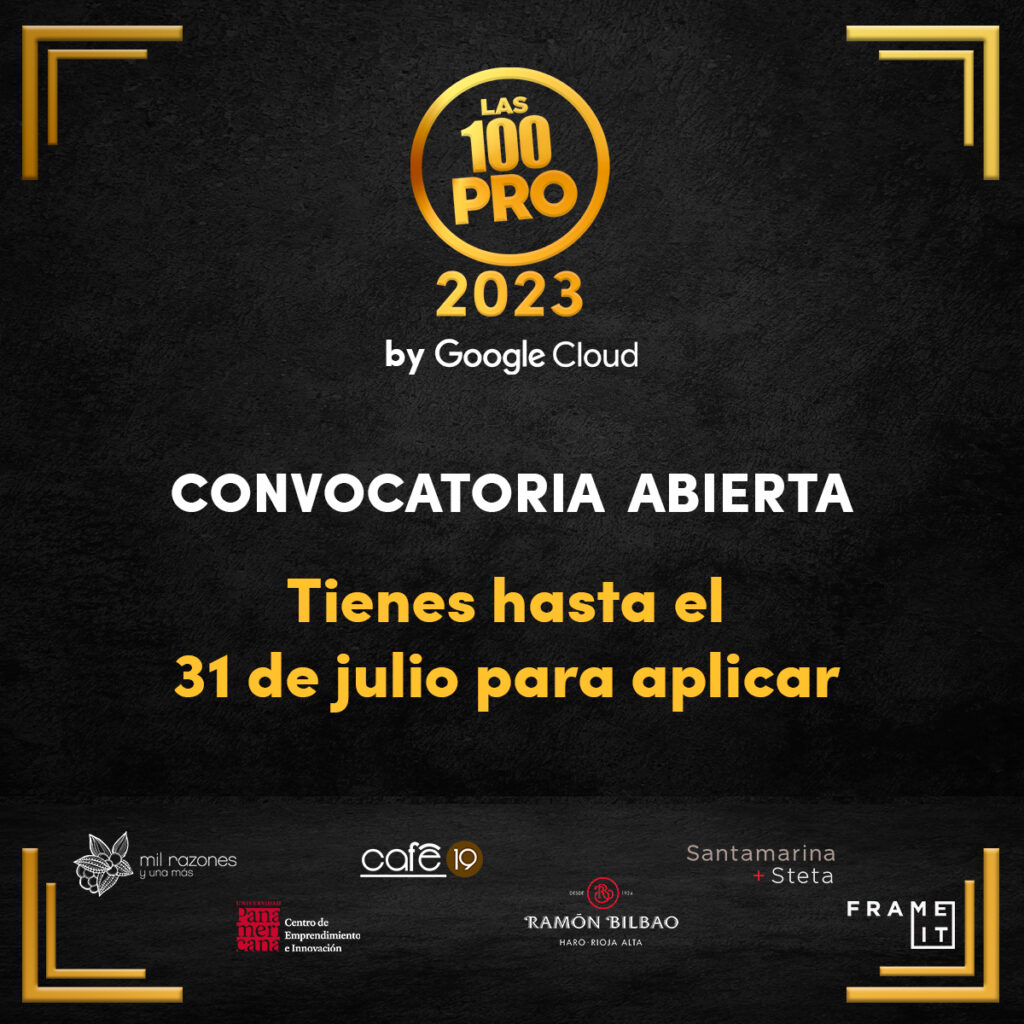
Interested in supporting the talent of entrepreneurs, Santamarina + Steta sponsors “The 100 PRO”, a project that seeks to recognize and exalt the work of entrepreneurs who have promised to bring about change in Mexico and Latin America.
In this edition of “The 100 PRO” those companies that can participate are:
Have at least one MVP/pilot running.
They are in the Serie A round stage or lower (Serie B onwards will no longer be able to participate).
Whose base of operation is Spanish-speaking.
Have a website and/or Facebook.
The call will open its first phase next July 1th and will close the July 31thFor more information on how to participate, visit:www.las100pro.com
The winners will be announced at an in-person event in Mexico City on October 19, where there will also be some interesting talks, ending with a cocktail and celebratory toast where the winners will be able to network with judges, sponsors and key players in the ecosystem.
The conference aims to foster convergence between arbitration and technology, exploring the role of artificial intelligence, GPT chat app, blockchain, smart contracts and arbitration in the current context. Guests will address the following topics:
Introduction to artificial intelligence and application of GPT Chat
Artificial intelligence and the future of arbitration
Artificial intelligence in arbitration practice
Blockchain, smart contracts and arbitration
In addition, at the end of the conference, the formal ceremony for the appointment of the new coordinators of the Nuevo León Arbitration and Young Arbitrators committees will take place. For the period 2023-2025, our partner Carlos Brehm to coordinate the ICC Mexico Nuevo León Young Arbitrators Committee, which will allow us to develop the practice of arbitration in Mexico.
On July 7, 2023, the IMSS published Resolution ACDO.AS2.HCT.260623/160.P.DIR, which contains Criterion number 02/2023/NV/SBC-LSS-27-IV.
The Resolution determines that payments classified as profit sharing (PTU) made in terms other than those established by Law are part of the base salary for contributions.
The Resolution entered into force the day after its publication.
On July 7, 2023, Agreement ACDO.AS2.HCT.260623/160.P.DIR, issued by the H. Technical Council of the Mexican Social Security Institute ("IMSS") in a regular session on June 26, 2023, was published in the Official Gazette of the Federation ("DOF"), by which Criterion number 02/2023/NV/SBC-LSS-27-IV is approved, which determines that payments qualified as profit-sharing (PTU) that are not made in accordance with the Law are part of the base salary for contribution, because they lose the nature of PTU and, therefore, are not excluded pursuant to article 27 of the Social Security Law.
In this regard, employers must:
Integrate the amounts paid for PTU that exceed the legal limit of 3 months of salary or the average over the last 3 years, in terms of article 127, section VIII of the Federal Labor Law.
Integrate into the base salary contributions the payments made for productivity bonuses or advances of PTU that could imply the payment of PTU outside the legal deadlines.
For the above reasons, it is considered that the following are carrying out an improper tax practice:
Anyone who excludes from the base salary contributions payments that exceed the maximum amount of PTU.
Anyone who pays PTU outside the period established in article 122 of the Federal Labor Law (before or after).
Anyone who excludes from the base salary contributions payments made for productivity bonuses or any other type.
Anyone who advises, counsels, provides services or participates in the implementation or execution of the aforementioned practices.
Any certified public accountant who issues a “clean and unqualified” compliance opinion in the social security report of employers who engage in any of the aforementioned conduct.